Tulip and Net by William Morris
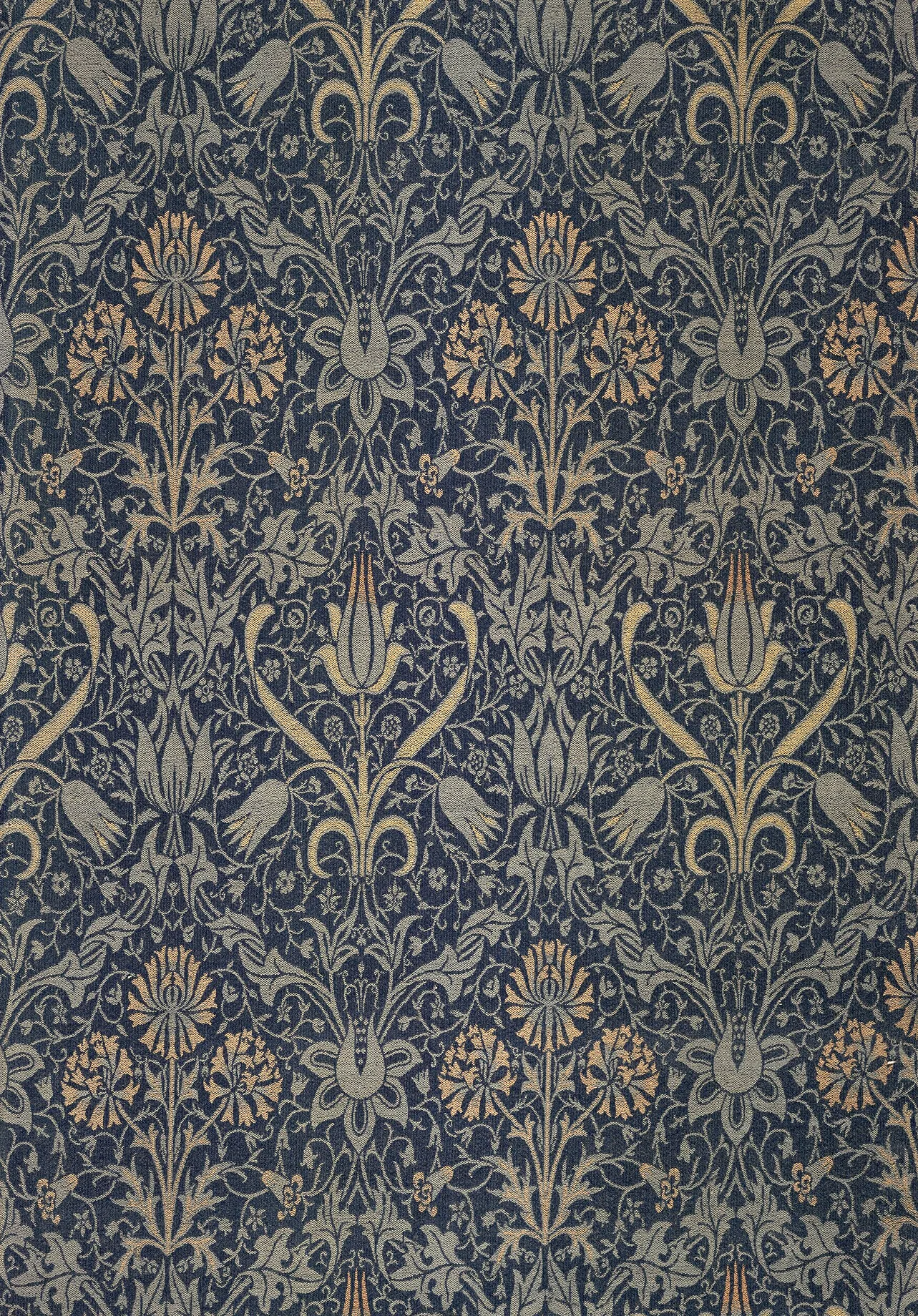
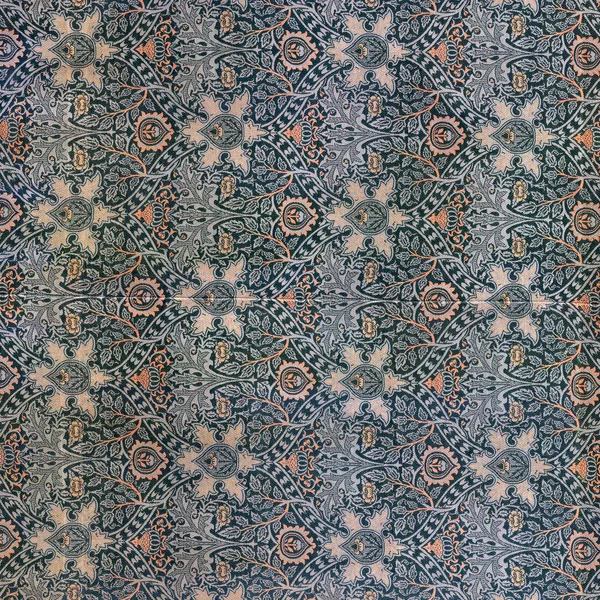
Tulip and Net by William Morris is an 1888 woven textile design featuring stylized tulip blossoms, scrolling foliage, and marigold-like heads set within a balanced, net-like framework.
| Designed | 1888 |
|---|---|
| Designer | William Morris |
| Type | textile |
| Motifs | flowers, geometric |
| Colourway | Indigo |
| Repeat | not measured |
| Source | Cooper Hewitt, Smithsonian Design Museum, via Wikimedia Commons. Licence: Public domain (Wikimedia Commons). Museum record |
Order Tulip and Net as a print
Format
Size (inches)
$40
Made to order. Shipping included in the US.
Seamless pattern file
A repeat tile of this design, ready to fill any size in design software.
What Tulip and Net shows
Tulip and Net by William Morris presents a dense floral pattern structured by a repeating geometric grid. Slender, curling stems loop outward and bend back together to form ogival frames across the surface. This framework creates a continuous trellis or net across the surface, holding flowering plants in balanced symmetry.
Inside each net compartment, upright tulip blossoms rise along the vertical axis. The central tulips show flared petals with soft yellow, orange, and pale blue highlights. Outward-curving stems branch from the base of the stalks, bearing dangling tulip heads and jagged leaves. Above these clusters, round flower heads resembling marigolds or carnations branch out to fill the upper segments of the repeat.
The background is covered with delicate secondary growth, including small foliage fronds, tiny bell blossoms, and fine sprigs. This rich infill leaves little open ground, giving the design the layered density typical of late Morris textiles. You can see how the dark indigo ground sets off the lighter blue leaves and warm golden petals, creating sharp contrast across the entire width.
Who designed it and when
Design records date Tulip and Net to 1888 and attribute the pattern to William Morris. However, source records show some disagreement. The Cooper Hewitt, Smithsonian Design Museum, which preserves an original woven wool panel from 1888–89, catalogs the creator as an unknown artist, while Commons category records list Morris himself. When you compare this pattern to other entries in the complete catalog of patterns, its structured symmetry and floral rhythms align closely with Morris’s late decorative style.
During the late 1880s, Morris explored formal geometric armatures for both woven hangings and wall coverings. Rather than using free-flowing natural vines, he often anchored plants inside defined lattices, a method seen earlier in designs like the Diaper pattern. Tulip and Net reflects that disciplined geometry, balancing architectural order with organic botanical drawing.
How it was made and used
Unlike printed chintzes created with carved woodblocks, Tulip and Net was produced as a woven textile. Morris & Co. wove the design as a heavy furnishing fabric using wool yarns. The structure of the weave allowed craftsmen to combine multiple yarn colors directly on the loom, producing a durable, tactile cloth suited for everyday interior use.
The original museum example at the Cooper Hewitt measures approximately 219 centimeters long by 92.5 centimeters wide (about 7 feet 2 inches by 36 inches). Fabrics of this weight and scale served as heavy curtains, portieres, and upholstery for armchairs and settees. The wool weave gave the pattern weight and warmth, draping cleanly while displaying its upright floral repeat.
Colourways
This site presents Tulip and Net in one primary colourway based on the museum scan: Indigo. This colourway features a deep navy blue ground that establishes strong visual depth across the pattern.
Against this dark blue field, the foliage and secondary stems appear in soft slate blue and pale sage tones. The primary floral motifs introduce warm color accents, with the tulip petals and circular blossoms shaded in ochre yellow, soft gold, and touches of muted orange. The interaction between the cool blue ground and the warm floral tones highlights the ogival trellis structure.
Tulip and Net as a print
Tulip and Net translates into wall art with strong vertical definition and crisp detail. You can order the design in three physical formats, printed and shipped by ArtsyWall: Archival Paper, Premium Canvas, and Framed Canvas.
When displayed in a frame, the symmetrical tulip motifs and curving net frames draw the eye inward and upward. The Framed Canvas option surrounds the artwork with a clean floating wood frame in finishes such as black, white, gold, silver, oak, or walnut. A dark frame reinforces the deep indigo ground, while an oak or gold frame complements the warm yellow blossoms.
Want Tulip and Net on a whole wall? See Tulip and Net wallpaper, sized to your wall.
Questions and answers
Who designed Tulip and Net?
William Morris is credited as the designer in pattern records and Wikimedia Commons archives, though historical museum documentation at the Cooper Hewitt lists the creator as an unknown artist. Because historical records differ on attribution, the firm Morris & Co. produced and issued the woven wool pattern under Morris's artistic direction in the late 1880s.
When was Tulip and Net designed?
Tulip and Net was designed in 1888. Surviving woven museum specimens, such as the wool fabric held in the textiles department at the Cooper Hewitt, Smithsonian Design Museum, carry an object date of 1888–89. The pattern dates from the later period of William Morris's textile production for his decorative arts firm.
What does the Tulip and Net pattern show?
Tulip and Net shows a vertically symmetrical arrangement of flowering plants organized within an ogival, net-like structure. Stylized tulip blooms rise from curved stems alongside rounded flower heads that resemble marigolds or carnations. Acanthus-style foliage, delicate sprigs, and small bell-shaped buds fill the field against a dark background, creating a dense floral lattice.
Was Tulip and Net a wallpaper or a fabric?
Tulip and Net was produced as a fabric rather than a wallpaper. Specifically, Morris & Co. manufactured it as a heavy woven furnishing fabric made of wool. The original textile was woven for interior furnishings, drapery, and upholstery, measuring over 36 inches across in width.
.jpg)