Jasmine by William Morris
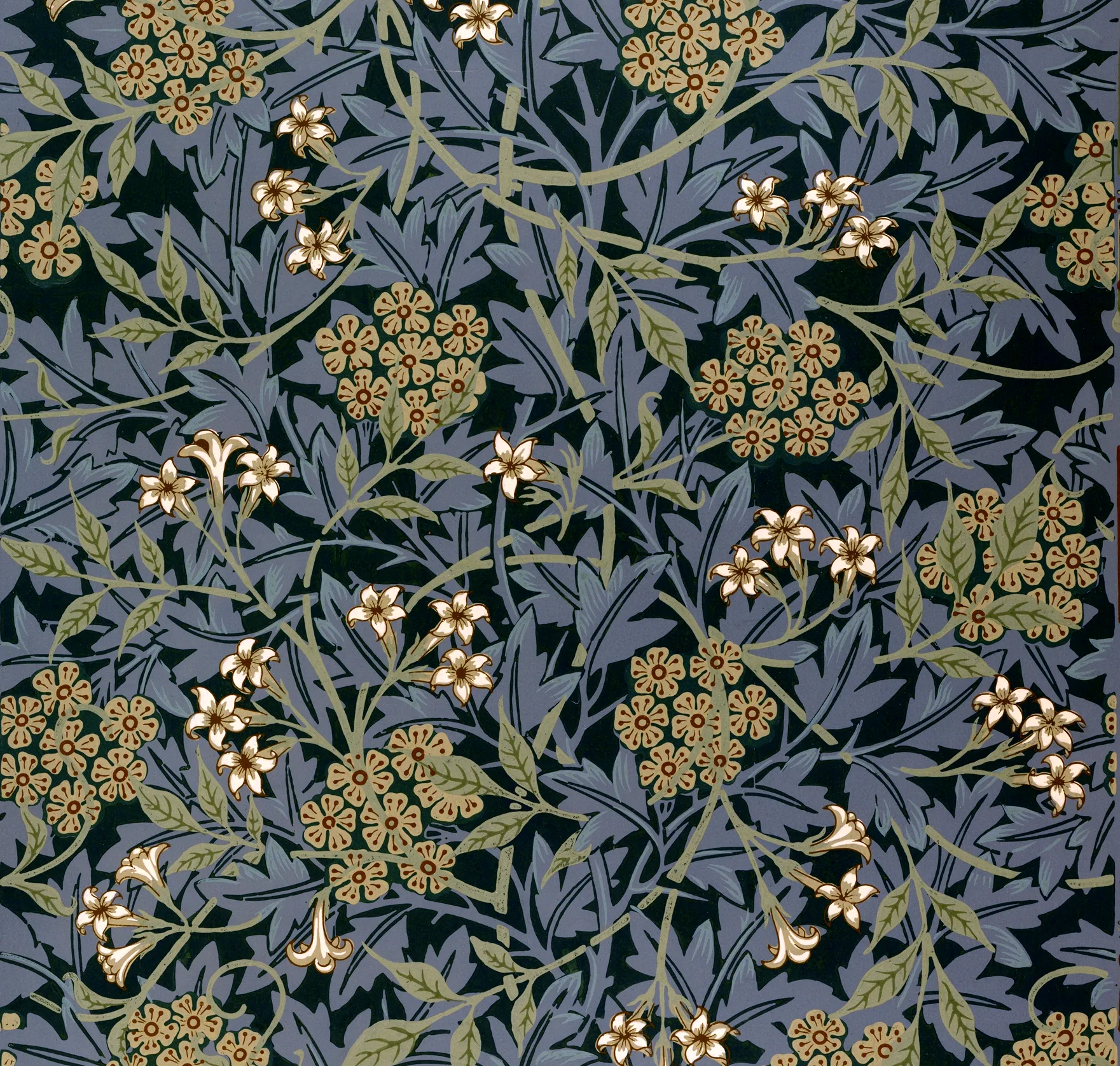
Jasmine is an 1872 wallpaper pattern designed by William Morris. The dense botanical pattern features climbing vines, pale jasmine flowers, and branching leaves over a deep ground.
| Designed | 1872 |
|---|---|
| Designer | William Morris |
| Type | wallpaper |
| Motifs | flowers, leaves |
| Colourway | Indigo |
| Repeat | not measured |
| Source | The Metropolitan Museum of Art. Licence: CC0. Museum record |
Order Jasmine as a print
Format
Size (inches)
$40
Made to order. Shipping included in the US.
Seamless pattern file
A repeat tile of this design, ready to fill any size in design software.
What Jasmine shows
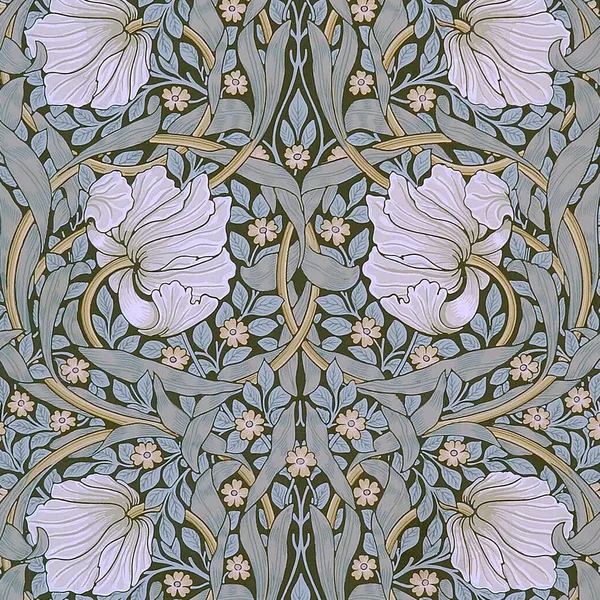
Jasmine is an 1872 wallpaper design by William Morris that weaves climbing jasmine blossoms through a dense thicket of leafy foliage. The design presents a multi-layered botanical scene across a dark ground. In the foreground, winding branches twist and loop across the surface. These pale branches carry small, cream-colored flowers with fluted, star-shaped petals and delicate golden outlines.
Beside the open jasmine blooms, Morris placed dense, rounded clusters of tiny five-petaled blossoms in a warm buff tone. Broad, deeply lobed leaves in muted slate blue spread through the midground, forming a leafy screen that covers almost all of the dark base. Smaller pointed leaves in pale olive green sprout along the slender branches. The intertwining stems connect every section into an unbroken growth, giving you a dense, continuous pattern without open patches of blank wall.
Who designed it and when
William Morris designed Jasmine in 1872. It belongs to a productive period in the early 1870s when Morris established his mature approach to surface pattern. During these years, he studied native British plants, garden climbers, and medieval herbals to create naturalistic yet disciplined repeats. You can learn more about his background, techniques, and career in our guide to William Morris.
Many later patterns sold under the Morris name came from other designers in his workshop, such as John Henry Dearle. However, Jasmine is an authentic William Morris creation, cataloged under his own hand in museum collections. In our pattern library, you can browse every William Morris design to see how his work evolved from early floral wallpapers to later textiles.
How it was made and used
Morris designed Jasmine as a continuous repeat pattern for domestic wallpaper. The pattern relies on precise block printing to align the separate colors and intertwined stems across neighboring sheets. Each color required a separate hand-carved woodblock, which craftsmen inked and pressed by hand onto paper lengths. The layers had to line up exactly so that the wandering jasmine vines crossed the seams without visible breaks.
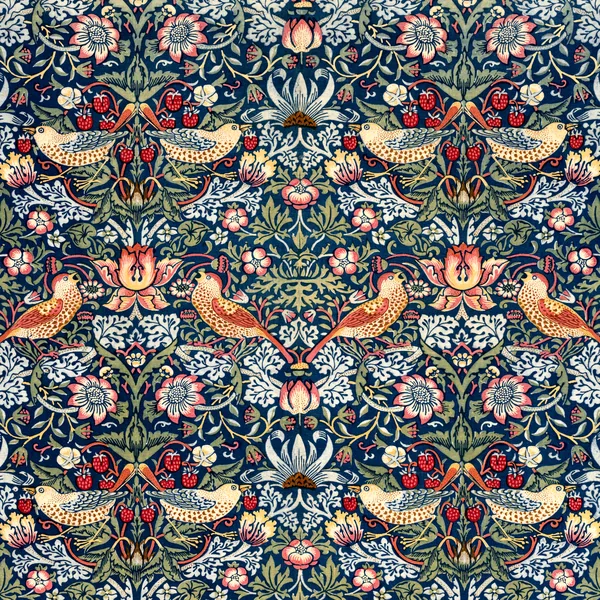
During the nineteenth century, wallpapers like Jasmine covered parlor and drawing room walls in homes that embraced the Arts and Crafts movement. Unlike later printed textiles such as the famous chintz Strawberry Thief, Morris intended Jasmine specifically for walls. The dense foliage subdued artificial light and softened large wall expanses, creating a quiet, garden-like enclosure indoors.
Colourways
On this site, Jasmine is available in the Indigo colourway. This colourway comes from a public-domain museum scan of an 1872 wallpaper specimen held in the collection of The Metropolitan Museum of Art. The scan preserves the original color balance and surface texture of the nineteenth-century printed paper.
The Indigo colourway pairs a dark, near-black indigo ground with slate blue foliage, pale olive leaves, and warm buff flower heads. The pale cream jasmine trumpets stand out clearly against the deep blue and shadowy tones beneath them. Because the background remains dark, the pale blossoms and looping branches guide your eye across the surface without harsh contrast.
Jasmine as a print
Prints of Jasmine are printed and shipped by ArtsyWall in three formats: Archival Paper, Premium Canvas, and Framed Canvas. You can also buy the pattern as peel-and-stick wallpaper at https://williammorriswallpapers.com/jasmine-wallpaper/.
When displayed as a framed wall print, Jasmine functions as an intricate botanical study. The balance of muted slate blue and soft cream makes it easy to hang alongside natural wood finishes, painted walls, or traditional furnishings. In a Framed Canvas format, the floating wood frame creates a clean boundary that contains the winding vines, while Archival Paper highlights the paper texture and fine woodblock outlines.
Want Jasmine on a whole wall? See Jasmine wallpaper, sized to your wall.
Questions and answers
Who designed Jasmine?
William Morris designed Jasmine in 1872. Morris created the botanical pattern for his decorative firm Morris & Co. While some patterns associated with the firm were created by other artists such as John Henry Dearle, museum records attribute the Jasmine design directly to Morris himself as one of his early botanical wallpaper designs.
When was Jasmine designed?
William Morris designed the Jasmine pattern in 1872. The design represents Morris's early period of wallpaper production during the 1870s, when he focused closely on English garden plants and intertwined climbing foliage. Surviving museum printings from The Metropolitan Museum of Art date to the same year of its initial creation.
What does the Jasmine pattern show?
The Jasmine pattern shows a dense botanical arrangement of climbing jasmine vines and hawthorn leaves against a dark ground. Slender branches curve across the surface, carrying cream-colored jasmine blossoms with star-shaped petals. Rounded clusters of tiny buff-colored florets and layered slate blue foliage fill the background, creating a continuous botanical network across the surface.
Was Jasmine a wallpaper or a fabric?
Jasmine was originally produced as a wallpaper. William Morris designed it in 1872 specifically for block printing onto paper rolls for interior walls. While Morris designed many woven and printed textiles later in his career, museum archives record Jasmine as a wallpaper pattern rather than a woven hanging or printed cotton chintz.