Chrysanthemum by William Morris
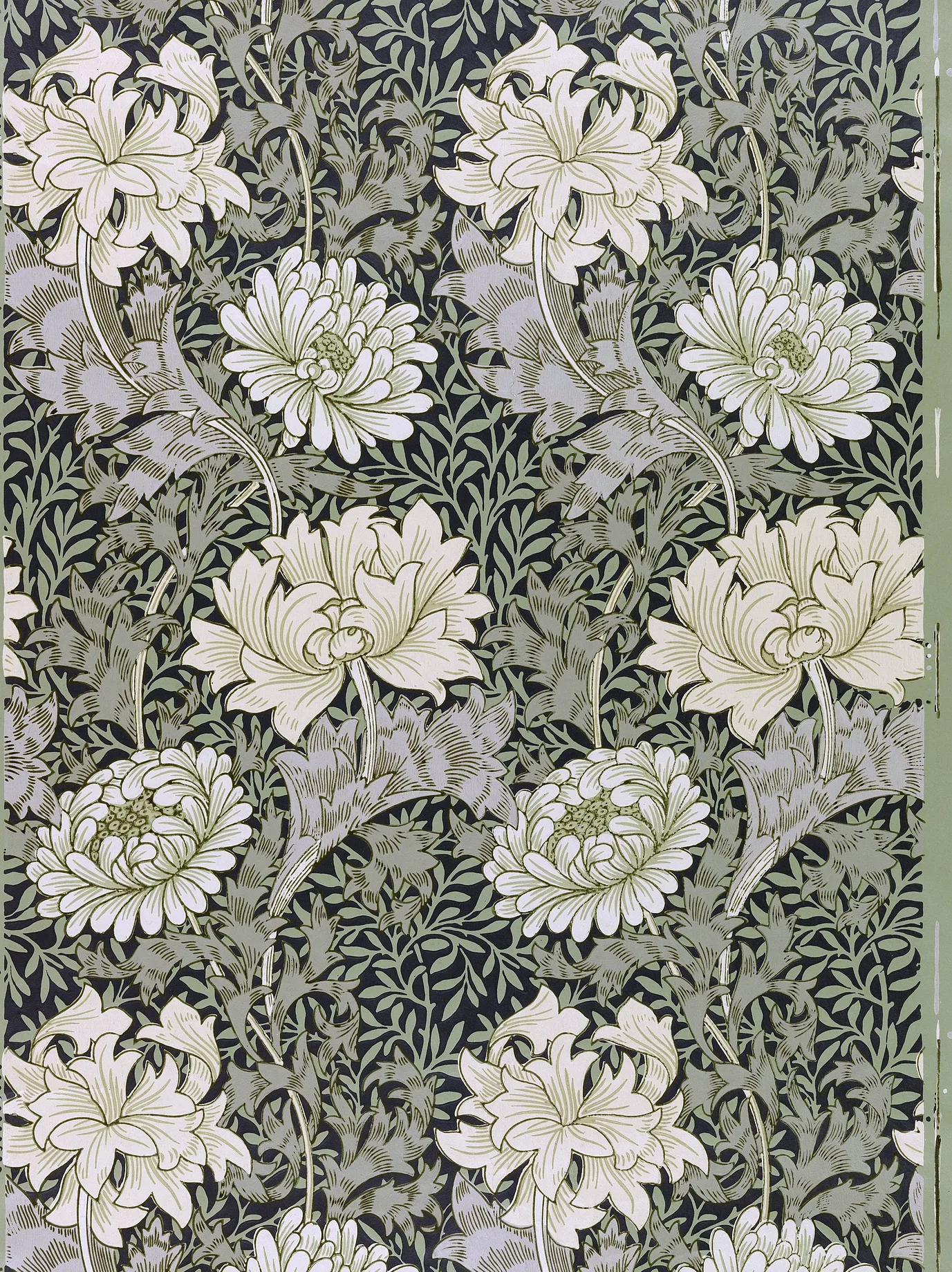
Chrysanthemum by William Morris is an 1877 wallpaper design featuring large, curving floral heads set against layered foliage and a dark ground.
| Designed | 1877 |
|---|---|
| Designer | William Morris |
| Type | wallpaper |
| Motifs | flowers, leaves |
| Colourway | Black on Stone |
| Repeat | 4.5 × 19.7 in (estimated) |
| Source | Cooper Hewitt, Smithsonian Design Museum, via Wikimedia Commons. Licence: Public domain (Wikimedia Commons). Museum record |
Order Chrysanthemum as a print
Format
Size (inches)
$40
Made to order. Shipping included in the US.
Seamless pattern file
One repeat tile, ready to fill any size in design software.
What Chrysanthemum shows
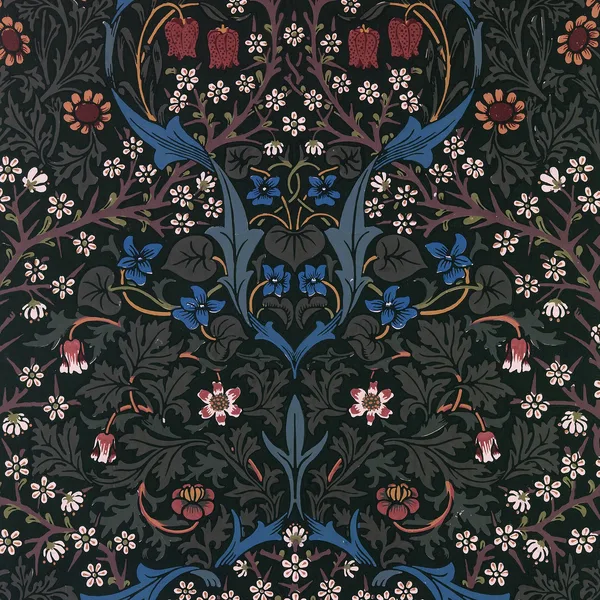
Chrysanthemum by William Morris presents an all-over floral and foliate pattern dominated by large, rounded chrysanthemum flower heads. Sinuous primary stems sweep upward through the composition, bearing expansive blossoms shown in side profile, three-quarter angles, and full round blooms. Wide, serrated leaves branch from these main stems, curving gracefully around the heavy flower heads.
Beneath these dominant foreground elements sits a dense, secondary network of smaller foliage resembling willow or lanceolate leaves. These smaller sprigs pack the negative space across the dark ground, eliminating empty background areas. The petals and major leaves carry fine line work that describes their natural curves and curling petal tips, producing a structured botanical rhythm.
Who designed it and when
William Morris designed Chrysanthemum in 1877. The pattern record attributes the creation to Morris, placing it alongside his mature botanical patterns for domestic interiors. To learn more about his background and broader artistic output, consult our guide to William Morris.
Attribution sources differ slightly regarding historical records. While design indices and Wikimedia Commons categories credit William Morris directly, the museum collection record at the Cooper Hewitt lists the artist as unknown on its catalog entry. Such variations often arise when surviving wallpaper rolls enter museum collections without maker stamps. You can explore other patterns by Morris and his circle across every William Morris design in our library, or compare this floral study with his famous Strawberry Thief textile pattern.
How it was made and used
Chrysanthemum was manufactured as a decorative wallpaper. The historical specimen preserved in the Cooper Hewitt collection is an English sidewall measuring 74.5 by 55.5 cm (29 5/16 by 21 7/8 inches). Artisans created the wallpaper using relief block-printed ink on sturdy paper rolls, stamping each color separately by hand.
As a sidewall, the paper covered the primary vertical wall expanse between the baseboard or wainscot and the picture rail. The continuous repeat of twisting foliage joined cleanly across multiple drops, wrapping Victorian rooms in dense botanical growth. Hand block printing lent subtle texture and depth to the ink layers, qualities that made these hand-crafted papers a central feature of the decorative arts movement.
Colourways
This site presents the pattern in the Black on Stone colourway, sourced from the preserved museum scan. In this palette, the design features a deep, dark ground that emphasizes the lighter botanical elements. The main chrysanthemum petals are rendered in pale off-white and soft stone tones, outlined with delicate dark shading.
The large foreground leaves and stems display muted grey and stone tints, while the dense secondary foliage behind them uses soft sage and slate tones. This subtle, low-saturation palette balances the complex graphic density of the twisting leaves and layered petals.
Chrysanthemum as a print
Prints of Chrysanthemum are printed and shipped by ArtsyWall in three formats: Archival Paper, Premium Canvas, and Framed Canvas. On Archival Paper, the fine linear details of the chrysanthemum petals and background foliage stand out crisply against the dark field. Hand-stretched Premium Canvas emphasizes the painterly rhythm of the trailing stems. Framed Canvas arrives ready to hang, surrounded by a wood floating frame available in black, white, gold, silver, walnut, and oak finishes. If you want to install this historical pattern as full wallcoverings instead of individual prints, you can view the peel-and-stick versions at williammorriswallpapers.com.
Want Chrysanthemum on a whole wall? See Chrysanthemum wallpaper, sized to your wall.
Questions and answers
Who designed Chrysanthemum?
William Morris designed Chrysanthemum according to design records and Wikimedia Commons categories. However, museum catalog sources differ, as the Cooper Hewitt catalog record lists the original artist as unknown. Morris produced the botanical pattern in the late 1870s for decorative wallcoverings.
When was Chrysanthemum designed?
The Chrysanthemum design dates to 1877. Both the design records and the Cooper Hewitt museum accession entry for the surviving printed sidewall give 1877 as the official production date. William Morris created the botanical artwork during a prolific period of wallpaper production.
What does the Chrysanthemum pattern show?
The Chrysanthemum pattern shows large, layered chrysanthemum blossoms, curving stems, and jagged leaves over an intricate background layer of dense willow-like foliage. Pale white petals and soft greyish leaves form bold floral rhythms against a deep, dark ground across the surface.
Was Chrysanthemum a wallpaper or a fabric?
Chrysanthemum was produced as a wallpaper. The historical specimen held in the Cooper Hewitt collection is classified as a paper sidewall measuring 74.5 by 55.5 centimeters. It was manufactured by hand using traditional relief block printing on paper rather than woven or printed textile.
.jpg)