Branch by William Morris
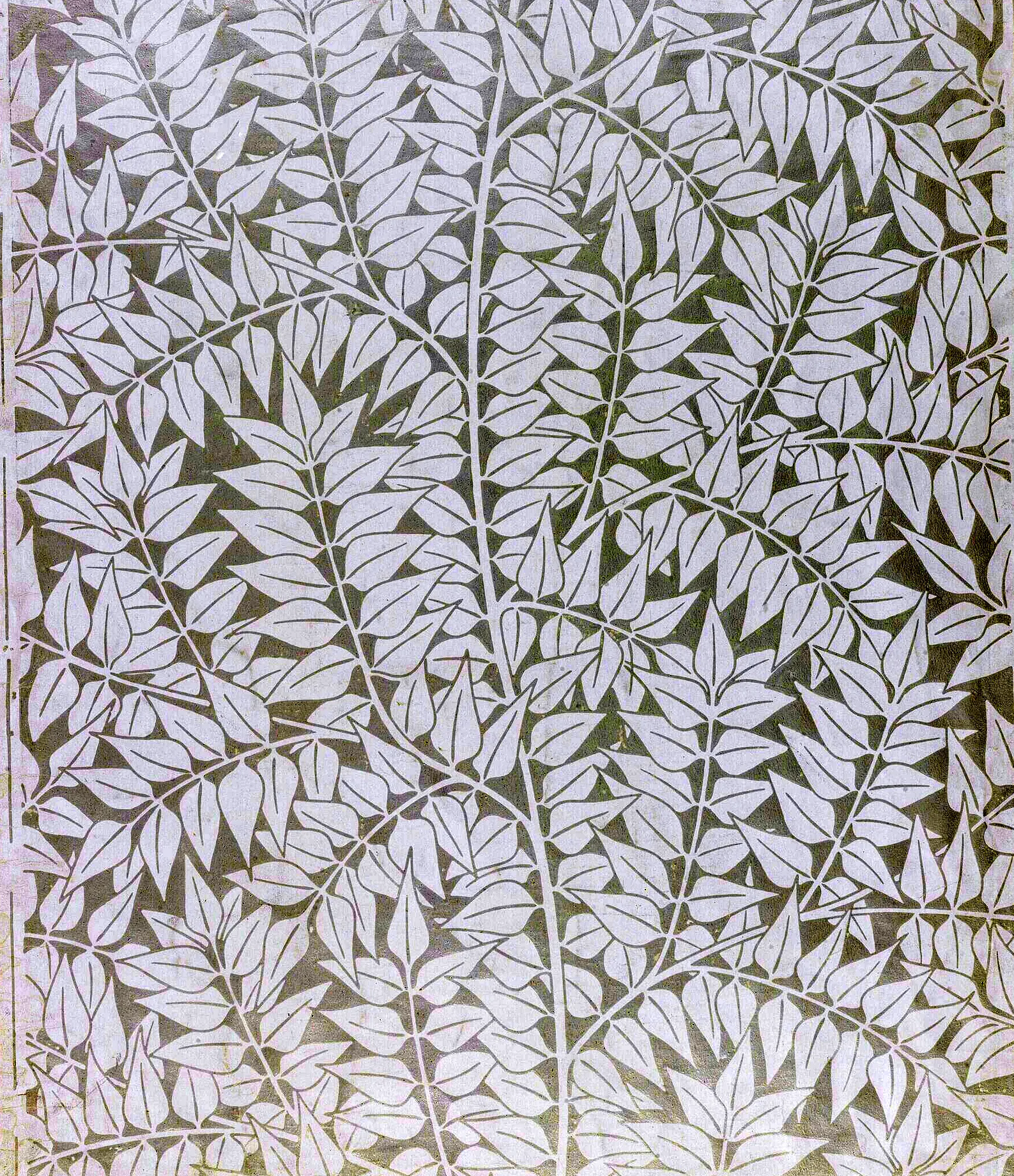
Branch by William Morris is an 1872 wallpaper pattern featuring dense sprays of laurel leaves. It presents a gentle, repeating botanical structure designed for Victorian interiors.
Colourways
| Designed | 1872 |
|---|---|
| Designer | William Morris |
| Type | wallpaper |
| Motifs | leaves, trees |
| Colourway | Cream on Ivory |
| Repeat | not measured |
| Source | Cooper Hewitt, Smithsonian Design Museum, via Wikimedia Commons. Licence: Public domain (Wikimedia Commons). Museum record |
Order Branch as a print
Format
Size (inches)
$40
Made to order. Shipping included in the US.
Seamless pattern file
A repeat tile of this design, ready to fill any size in design software.
What Branch shows
Branch by William Morris is an 1872 wallpaper design filled with dense sprays of laurel leaves. The composition is built around upright and gently curving boughs that divide into smaller leafy stems. Slender, pointed leaves shoot off each stem in balanced pairs, covering the picture plane so the ground appears only in small pockets between the foliage.
Each leaf is rendered with a simple, clear outline and a single centerline vein. The stems crisscross and overlap across the surface, creating an interlocking rhythm that flows upward and outward. Because the pattern contains no flowers, fruit, or birds, it functions as a pure botanical study in foliage and negative space, anticipating themes seen in Morris’s later patterns such as Willow Bough.
Who designed it and when
The site record dates Branch to 1872 and attributes the pattern to William Morris. Morris produced several focused leaf patterns during the early 1870s that explored regular vertical and diagonal repeats. You can learn more about his background and textile work in our guide to William Morris.
The historical sources differ across museum records. While the standard design record and Wikimedia Commons categories name William Morris as the designer, certain Cooper Hewitt accession records list the artist as unknown. Other museum sheets credit Jeffrey & Company, the London firm that carved the blocks and printed wallpapers for Morris & Co.
How it was made and used
Branch was produced as a wallpaper sidewall through traditional woodblock printing. Skilled printers applied ink to hand-carved wooden blocks and stamped each roll of paper by hand. Museum catalog notes describe original printings produced with white ink on a semi-glazed ground, as well as versions printed in green with the pattern reserve-printed in grey.
As a sidewall paper, Branch was intended to cover the main field of a domestic wall. Its repeating foliage offered subtle movement across large vertical areas without overwhelming the eye. You can explore how Branch relates to other Victorian wallpapers in our index of every William Morris design.
Colourways
This site presents Branch in three colourways derived from public-domain museum scans: Cream on Ivory, Purple on Stone, and Stone.
Cream on Ivory offers a pale, tonal presentation. Crisp white foliage rests on an ivory ground, giving the design an airy, quiet appearance suited to well-lit rooms.
Purple on Stone introduces a contrasting field. The leafy branches show as light silhouettes set against a muted violet or lavender-purple ground, bringing out the crisp lines of each individual leaf.
Stone provides a classic neutral scheme. The leaves appear in an off-white hue against a soft stone-grey background, preserving the natural feel of the original block-printed wallpaper samples.
Branch as a print
Prints of Branch are printed and shipped by ArtsyWall in three formats: Archival Paper, Premium Canvas, and Framed Canvas.
On Archival Paper, the sharp leaf outlines and subtle ground tones render with crisp clarity on heavy cotton rag paper. Premium Canvas provides a tactile, gallery-wrapped presentation that stretches the leaf clusters across solid wood bars.
Framed Canvas surrounds the wrapped canvas with a solid wood floating frame, leaving a small perimeter gap that highlights the edges of the artwork. Across every format, the climbing laurel leaves offer a structured organic feel that fits easily into modern or period rooms.
Want Branch on a whole wall? See Branch wallpaper, sized to your wall.
Questions and answers
Who designed Branch?
Branch is credited to William Morris in the design record, dating from 1872. However, museum records at the Cooper Hewitt differ, with some catalog entries listing the designer as unknown or crediting the printing firm Jeffrey & Company. Jeffrey & Company was the commercial manufacturer that block-printed wallpapers for Morris during this era.
What does the Branch pattern show?
The Branch pattern shows repeating sprays of simple laurel leaves clustered along curving, slender boughs. The foliage covers most of the surface, leaving small glimpses of the background showing through the leaves. Each leaf includes a distinct central vein line, and the climbing stems create a continuous organic pattern without any flowers, fruits, or animal figures.
Was Branch a wallpaper or a fabric?
Branch was originally produced as a wallpaper sidewall rather than a printed or woven textile. The pattern was hand-printed from relief woodblocks onto rolls of paper, designed to cover interior domestic walls. Historic museum samples from 1872 confirm it was produced on paper, including variations printed on semi-glazed surfaces and reserve-printed paper grounds.
How does Branch look framed?
Framed as a canvas print, Branch displays an orderly network of botanical leaves encased within a wood floating frame. The small gap between the canvas edge and the frame creates depth, focusing attention on the upward-reaching stems. The clean leaf silhouettes provide an understated natural backdrop that complements both traditional interiors and minimalist gallery walls.
.jpg)